- Highlights
- What Is the Difference Between Personal Injury and Property Damage?
- How Does the Pre-Suit Phase Work for Personal Injury Claims?
- Why Doesn’t Property Damage Count as Personal Injury?
- What Actually Qualifies as a Personal Injury Claim?
- How Are Damages Calculated Differently in the Pre-Suit Phase?
- Why Is Keeping Claims Separate Crucial for Your Recovery?
Highlights
- Legal Classification: Personal injury law exclusively addresses physical, mental, and emotional harm to a person, explicitly excluding damaged physical property.
- Distinct Claim Paths: Property damage and personal injury claims follow entirely separate administrative and pre-suit processes during insurance negotiations.
- Pre-Suit Purpose: The pre-suit phase establishes liability, documents medical treatment, and attempts settlement before formal litigation begins.
- Valuation Differences: Personal injury claims account for non-economic damages like pain and suffering, whereas property damage relies strictly on objective repair or replacement values.
- Crucial Exclusions: Vehicles, real estate, and personal belongings fall strictly under property claims and can’t be bundled into personal injury compensation.
- Strategic Representation: Managing the pre-suit phase effectively requires distinct legal strategies for bodily harm versus property recovery to maximize total compensation.
What Is the Difference Between Personal Injury and Property Damage?
When an unexpected accident occurs, individuals often assume all resulting losses fall under a single legal umbrella. However, civil law strictly separates harm caused to a human body from damage inflicted on physical objects.
Personal injury law governs claims involving bodily harm, emotional distress, and psychological trauma suffered by an individual due to another party’s negligence. In contrast, property damage claims focus entirely on fixing or replacing physical items, such as a crushed vehicle, a damaged smartphone, or impacted real estate. Understanding this boundary during the early pre-suit phase is critical because insurance companies evaluate, process, and settle these two categories under entirely different legal structures and policy limits. Attempting to claim a wrecked bumper under a bodily injury claim will immediately stall pre-suit negotiations.
How Does the Pre-Suit Phase Work for Personal Injury Claims?
The pre-suit phase represents the crucial period between the initial accident and the formal filing of a lawsuit in court. During this timeframe, injured parties gather evidence, complete necessary medical care, and attempt to negotiate a fair settlement with the at-fault party’s insurer. For a valid personal injury claim, the primary focus rests on proving liability and documenting the full extent of physical harm. Attorneys build a comprehensive demand package detailing emergency room visits, ongoing physical therapy, lost wages, and non-economic impact. If the insurance carrier agrees to a fair settlement during these pre-suit negotiations, the case concludes without ever entering a courtroom. According to legal resource platforms like Nolo, the vast majority of personal injury disputes are successfully resolved during this administrative pre-suit stage, saving both parties substantial time and litigation costs.
Why Doesn’t Property Damage Count as Personal Injury?
Property damage doesn’t qualify as personal injury because civil law measures economic loss to objects fundamentally differently than harm to human beings. Objects have a calculable, objective market value, whereas human health and well-being involve subjective recovery trajectories and intangible suffering. Bundling property repairs into personal injury claims would distort the valuation protocols used by courts and insurance adjusters alike. While a single accident frequently generates both types of claims simultaneously, they remain legally independent actions. Settling your auto body repair bill doesn’t close out your medical claim, provided you don’t sign a global release form. To clarify what falls outside bodily injury coverage, consider these common property damage items:
- Motor Vehicles: Car repair costs, total loss payouts, frame restoration, and rental car reimbursements.
- Personal Effects: Broken laptops, crushed eyeglasses, damaged cell phones, or destroyed clothing worn during the incident.
- Real and Intellectual Property: Structures, landscaping, fences, or physical business assets impacted by the negligent act.
- Diminished Value: The lost resale value of an asset even after it has been fully repaired to operational standards.
What Actually Qualifies as a Personal Injury Claim?
A valid personal injury claim requires demonstrable physical, mental, or emotional harm directly resulting from someone else’s breach of duty. The legal structure of personal injury law exists to restore the injured individual, as closely as possible, to their pre-accident physical and financial state. Unlike property claims that rely strictly on repair invoices, bodily injury claims encompass both immediate medical costs and long-term human impacts. Establishing these damages requires detailed medical documentation, expert prognosis testimony, and clear proof of causation. To better understand what fits within this legal category, review the core components that make up a bodily injury claim:
- Direct Bodily Harm: Traumatic brain injuries, broken bones, spinal cord damage, lacerations, and internal organ damage.
- Medical Expenses: Emergency transport, surgical fees, prescription medications, hospital stays, and ongoing rehabilitation.
- Lost Earning Capacity: Unpaid time off work during recovery, as well as long-term loss of future earning potential due to permanent disability.
- Emotional and Psychological Distress: Post-traumatic stress disorder (PTSD), severe anxiety, depression, and loss of enjoyment of life.
- Pain and Suffering: Compensation for the physical discomfort and chronic pain endured throughout the treatment process.
How Are Damages Calculated Differently in the Pre-Suit Phase?
Valuing personal injury and property damage requires entirely separate mathematical and legal formulas during pre-suit settlement talks. Property damage calculations are straightforward: adjusters review repair estimates, parts lists, or the Fair Market Value (FMV) of the item immediately prior to the incident. There is no room for negotiating emotional attachment to a vehicle. Personal injury calculations, however, combine concrete economic losses with complicated non-economic multipliers. Adjusters add up hard costs like hospital bills and lost wages, then apply a multiplier—typically between 1.5 and 5, depending on severity—to account for pain and suffering. Reliable legal education resources like the Cornell Law School Legal Information Institute emphasize that non-economic damages are designed to address the unique human impact of an injury, something that property damage structures simply can’t accommodate.
Why Is Keeping Claims Separate Crucial for Your Recovery?
Maintaining a strict separation between property damage and personal injury claims during the pre-suit phase protects your financial and legal rights. Insurance companies often attempt to resolve property damage claims quickly, sometimes offering quick checks that contain broad release language. If an accident victim unknowingly signs a general liability release while accepting a vehicle repair payment, they may accidentally forfeit their right to pursue compensation for ongoing medical treatment. Legal advocacy groups like the American Bar Association consistently advise crash victims to review release documents carefully to make sure that property settlements explicitly exclude bodily injury claims. Resolving your vehicle’s repairs swiftly allows you to regain transportation while keeping your personal injury file open as your medical treatment progresses.
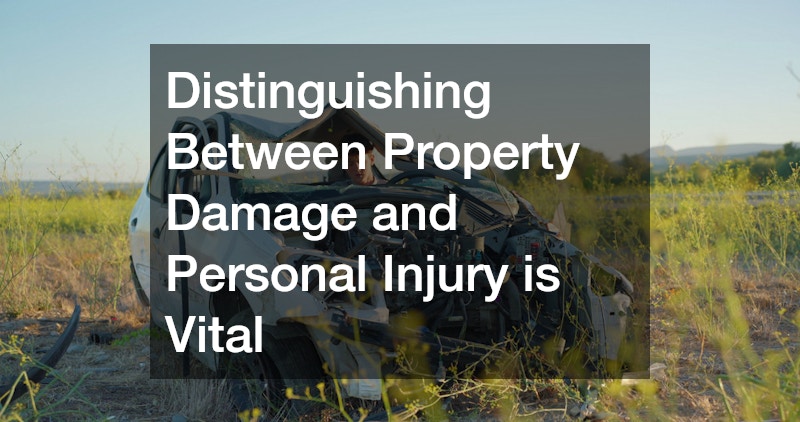
Distinguishing between property damage and personal injury is vital when managing the pre-suit phase of any negligence claim. While property damage addresses the repair or replacement of physical objects like cars and personal belongings, personal injury law focuses entirely on compensating human suffering, physical trauma, and medical expenses. Because both types of claims operate under vastly different evaluation metrics and administrative rules, keeping them strictly separated makes sure that you don’t prematurely settle your medical rights for a quick vehicle repair check. By understanding these legal boundaries early in the process, injury victims can build stronger pre-suit cases, protect their long-term financial stability, and secure full compensation for both their physical recovery and their property losses.